Children with a Social Worker (CWSW)
Section outline
-
From September 2021, the Virtual School Head's role was extended to include the strategic leadership of promoting the educational outcomes of all children and young people with a Children's Services Practitioner, or those who have had the support of a Children's Services Practitioner in the past six years. This includes all children and young people who are or were assessed as needing support from Children's Services due to safeguarding and/or welfare concerns, including those subject to child in need or child protection plans.
For Children's Services Practitioners working with young people aged 16 to 18, education, training and participation remain key protective factors. Young people with a Children's Services Practitioner are significantly more likely to experience disrupted education, lower attainment, poor attendance, exclusions, mental health difficulties and challenges in progressing to employment, apprenticeships, further study or higher education. These factors increase the risk of them being out of education, training or employment (NEET). Children's Services Practitioners therefore play a critical role in promoting educational participation, aspiration and successful transitions into adulthood.
Key aims
-
make visible the disadvantages that children and young people with a social worker can experience, enhancing partnerships between Children's Services, education providers and other agencies to help all professionals maintain high aspirations
-
promote practice that supports young people's engagement in education, training and employment opportunities, recognising that participation can be a significant protective factor and contribute to positive long-term outcomes
-
improve educational, participation and progression outcomes, reducing the risk of learners becoming NEET (not in education, employment or training)
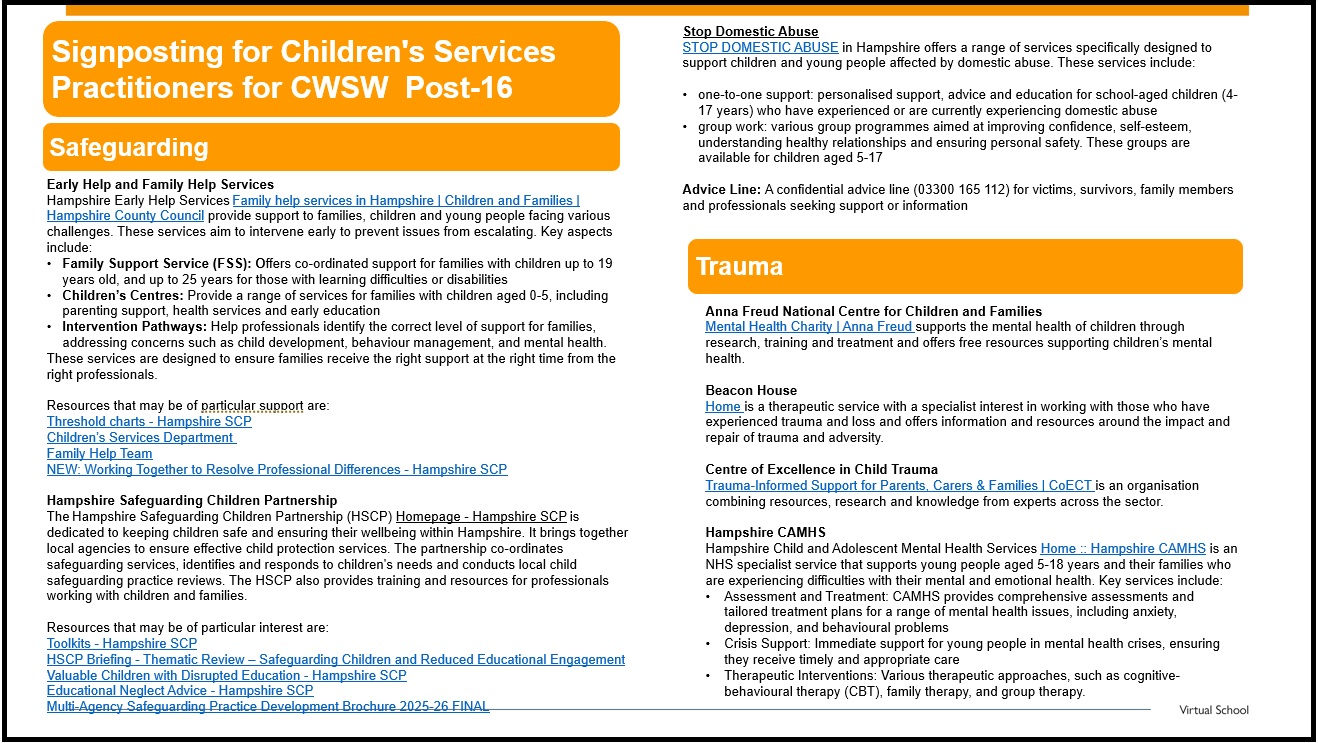
Click here to access important resources, including:
-
-
-
Prioritise participation, attendance and educational engagement as safeguarding and protective factors
-
ensure the strongest communication and collaboration possible with the wide range of staff and other agencies involved (for example: tutors, pastoral staff, designated safeguarding leads, additional learning support teams, SEND teams, careers advisers, Virtual School and health professionals)
-
ensure relationships and the young person's voice are at the centre of any planning and decision-making
-
support effective transitions into post-16 education, training, apprenticeships and employment
-
-
-
Identify and understand the needs and vulnerabilities of learners with a Children's Services Practitioner
-
ensure key colleagues (DSL, safeguarding team, tutor, additional learning support staff, SEND staff and pastoral leads) collaborate to provide consistent support
-
identify and understand barriers to engagement, participation, attendance and achievement
-
ensure vulnerable learners receive appropriate support and targeted intervention
-
ensure relationships and learner voice remain central to support planning
-
utilise wider support and partnerships including Children's Services, Virtual School, health services and community organisations
-
-
-
Enhancing partnerships between education providers and Children's Services
-
training and development opportunities for social care and education professionals
-
targeted data-informed interventions and projects
-
advice and guidance regarding educational barriers and vulnerabilities
-
resources, tools and information to improve outcomes for children and young people with a social worker
Virtual School Heads are not being asked to:
-
work directly with individual children, young people or families, including case management or social work functions
-
track or monitor the educational progress of individual children on behalf of social care teams or education providers
-
provide direct educational interventions or additional learner support
-
respond directly to requests from families regarding individual cases
-
undertake statutory social work responsibilities
-
take responsibility for SEND provision or EHCP processes, which remain the responsibility of education providers and local authorities
-
-
-
Children's Social Care National Framework
-
Keeping Children Safe in Education (particularly relevant for understanding safeguarding responsibilities of FE colleges and sixth form settings)
-
SEND Code of Practice: 0-25 Years
-
Children and Families Act 2014
-