Previously Looked-After Children (PLAC)
Section outline
-
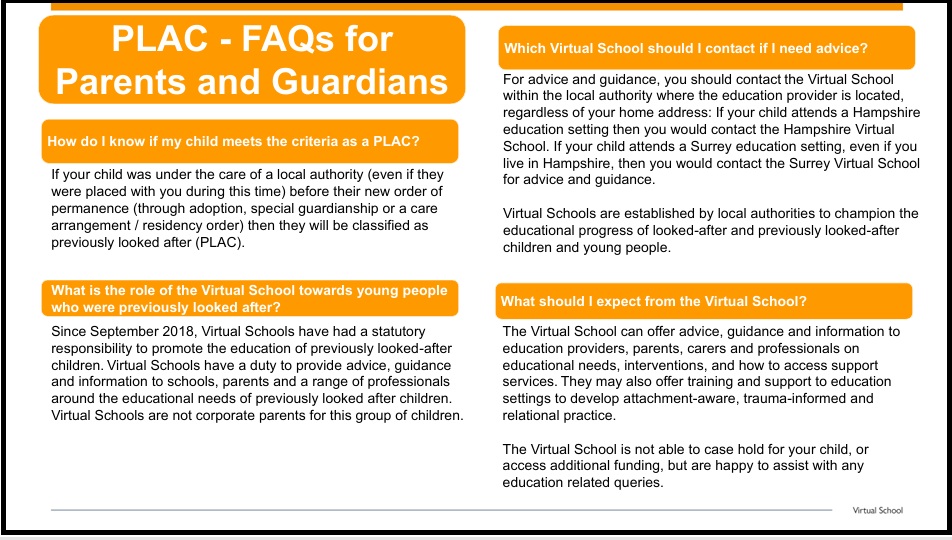
Since September 2018, virtual schools have had a statutory duty to provide advice, guidance and information to education settings, parents/carers and professionals, working to improve the educational outcomes of previously looked-after children. This duty extends to supporting educational providers to better understand the needs of care-experienced learners and to promote successful educational participation and achievement.
The Virtual School promotes high aspirations, participation, progress and achievement for all vulnerable children and young people. However, unlike its role for children in care, the Virtual School is not the corporate parent for previously looked-after young people, so does not case hold.
PLAC status
For a young person to be classified as previously looked-after (PLAC), they must have been under the care of a Local Authority for one day or more before moving to a new order of permanence through:
-
an adoption order
-
a special guardianship order (SGO)
-
a child arrangement order (CAO), or residency order (RO) that specifies the child is to live with a named person
-
other equivalent permanence arrangements recognised in legislation
The new order of permanence will state in the first few pages that, prior to the order being granted, the child/young person was under the care of a named local authority.
Not all young people subject to a special guardianship order or child arrangements order will have previously been looked after by a local authority. Evidence of previous care status should be available from the relevant legal order or local authority documentation.
Key aims
-
raise awareness of the needs of care-experienced learners
-
promote attachment-aware, trauma-informed and relational approaches that ensure positive educational experiences and achievement for PLAC
-
support positive educational experiences, attainment, achievement and progression
-
strengthen partnerships between learners, parents/carers, designated staff and relevant professionals
-
promote high aspirations and successful transitions to higher education, apprenticeships, employment and adulthood
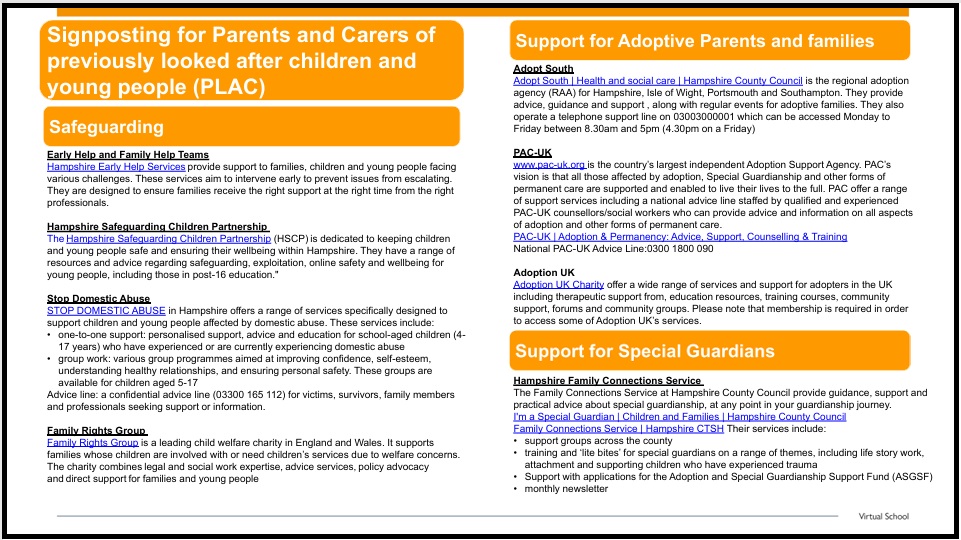
Click here to access important resources, including:
-
-
Post-16 providers should:
-
identify and know their previously looked-after learners where this information has been shared
-
create an environment where learners and families feel safe to disclose their PLAC status
-
ensure there is a named member of staff with responsibility for supporting care-experienced and previously looked-after learners
-
ensure relevant staff receive training and maintain an understanding of attachment, trauma and relational practice
-
understand and respond to individual barriers affecting participation, attendance, progress and achievement
-
provide targeted academic, pastoral and wellbeing support where appropriate
-
ensure learner voice and positive relationships are central to planning and support
-
work collaboratively with parents/carers, virtual schools and other professionals where appropriate
-
support learners to access information, guidance and opportunities relating to higher education, apprenticeships, employment and careers
-
consider how available bursaries, discretionary funding and additional support may be used to remove barriers to participation and achievement (based on eligibility)
-
-
The Virtual School can provide:
-
training and development for education providers and partners
-
advice and guidance on supporting previously looked-after learners, including information on attachment-aware and trauma-informed practice
-
access to the Virtual School Extended Duties team via email at VSExtendedDuties@hants.gov.uk
-
signposting to appropriate services, agencies and resources
-
access to evidence-informed tools, guidance and support materials
-
consultation on approaches that promote engagement, participation and achievement
The Virtual School does not work with individual young people who have PLAC status - including tracking and monitoring educational progress of individual children and providing academic or other interventions. Responsibility for educational support remains with the post-16 provider, working collaboratively with learners, families and relevant professionals as needed.
-