Children with a Social Worker (CWSW)
Section outline
-
This brief video outlines key information about children with a social worker and how Children's Services Practitioners can best support their education.
Supporting the Education of Children with a Social Worker
From September 2021, the Virtual School Head’s role has been extended to include the strategic leadership of promoting the educational outcomes of all children and young people with a Children's Services Practitioner, or those who have had a support of a Children's Services Practitioner in the past six years. It covers all children who are or were assessed as needing a Children's Services Practitioner at any time in the past six years due to safeguarding and/or welfare reasons, which includes all those subject to a Child in Need plan or a Child Protection plan. This includes children aged from 0 up to 18 in all education settings.
Key Aims
- Make visible the disadvantages that children with a social worker can experience, enhancing partnerships between education settings and local authorities to help all agencies hold high aspirations for these children
- Promote practice that supports children’s engagement in education (avoiding absence, suspensions and exclusions), recognising that attending an education setting can be an important factor in helping to keep children safe from harm
- Level up children’s outcomes and narrow the attainment gap.
Click here to access important resources, including:
-
- Ensure the strongest communication and collaboration possible with the wide range of staff and other agencies involved (e.g. class teacher/form tutor, DSL, DT, SENCo, etc)
- Prioritise attendance as a safeguarding issue
- Ensure relationships and child and parent/carer voice are at the centre of any approach
-
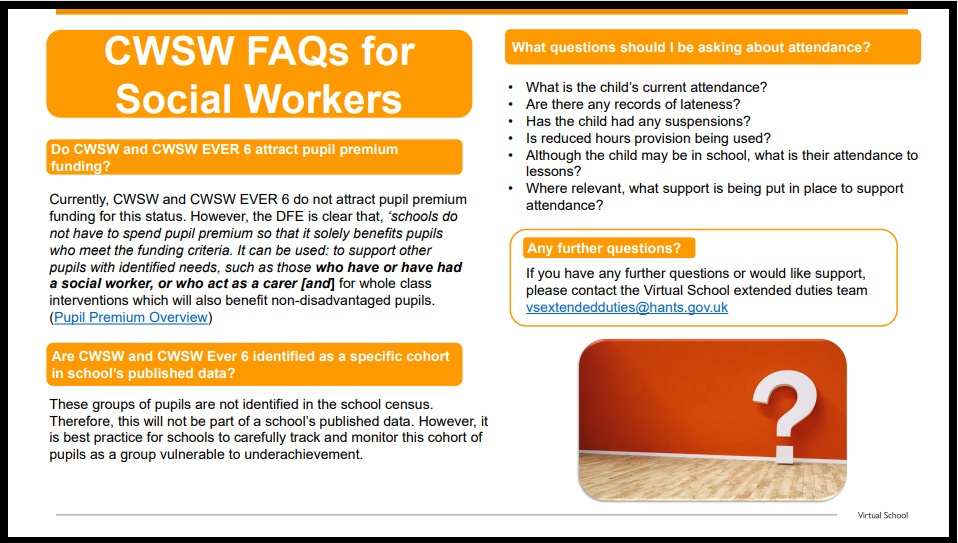
- Identify and know their CWSW and CWSW EVER 6 cohort
- key colleagues (DSL, DT, SENDCO, key worker) to liaise and collaborate to ensure consistency in support for CWSW and CWSW EVER 6
- Identify and understand the barriers and needs for this group of children
- Ensure prioritisation of the cohort and targeted response
- Ensure relationships and pupil voice are at the centre of any approach
- Utilise wider support and partnerships
-
- Enhancing partnerships between schools and social care
- Training and development offer to schools & partners
- Targeted data informed interventions / projects
- Providing advice and guidance
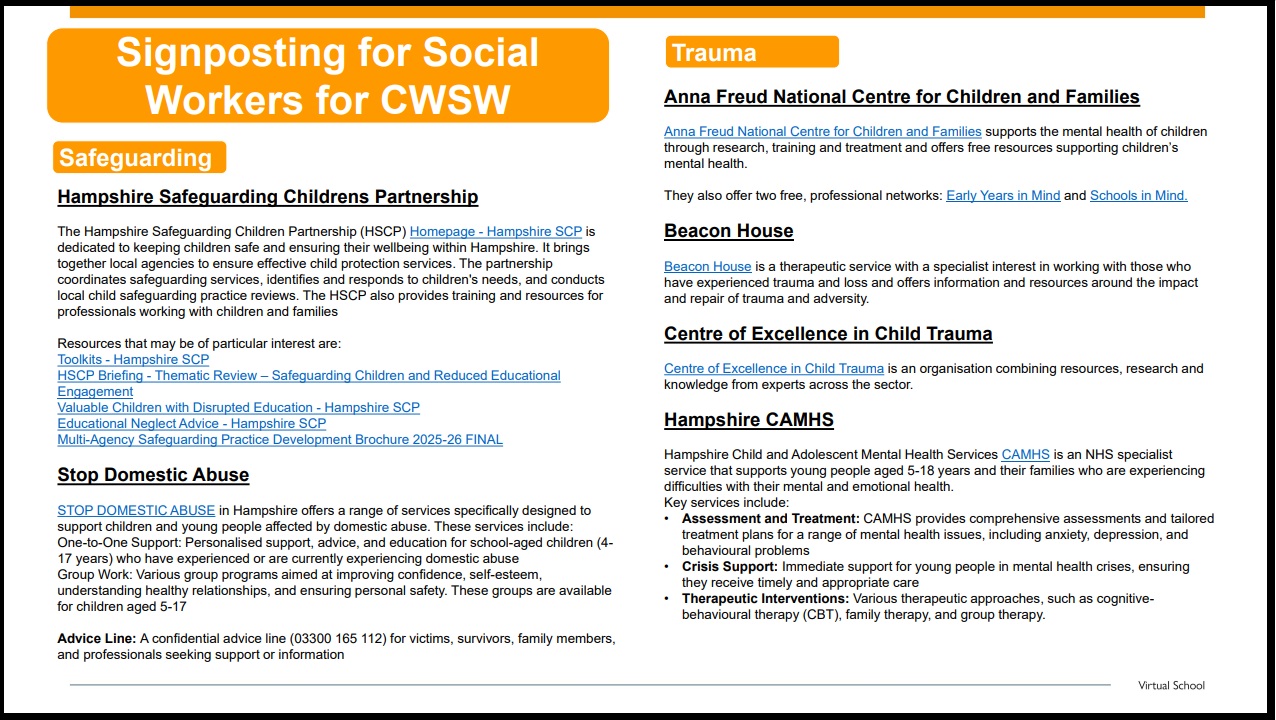
- Free tools, resources and information
Virtual school heads are not being asked to:
- work with individual children who have, or have had, a Children's Services Practitioner or their families - including tracking and monitoring educational progress of individual children or providing academic or other interventions
- respond to requests from parents or carers to offer advice, intervention and support in relation to individual children with a social worker
- take responsibility for children with special education needs and disability (SEND) who do not require or need a Children's Services Practitioner, as defined above.