Children in Kinship Care
Section outline
-
In September 2024, the role of virtual schools expanded further to specifically include championing the educational attendance, attainment and progress of children in kinship care. As young people move into post-16 education, this role continues to focus on promoting participation, achievement, progression and successful transitions into adulthood. This includes supporting awareness of the particular opportunities and challenges that kinship young people may experience in sixth forms, further education colleges, specialist post-16 provision, apprenticeships and training settings.
What can I expect from my young person's education provider?
-
positive partnerships that support you and your young person throughout their post-16 education journey, including attendance, wellbeing, pastoral support, academic achievement and progression planning
-
regular communication about your young person's strengths, aspirations and any support needs that may affect their engagement or success in education
-
opportunities for your young person's voice to be heard and considered in decisions about their education and future pathways
-
a targeted response to any emerging needs that may impact engagement, participation, attendance or achievement
-
engagement with wider support services and organisations where appropriate, including SEND services, careers guidance, wellbeing support, social care and Virtual School services
-
support with transitions into employment, apprenticeships, further learning, higher education and independent adulthood
-
a recognition of the strengths, experiences and circumstances of kinship families and the potential impact these may have on educational participation and achievement
Previously looked-after child (PLAC) status
Young people in kinship care may also be a previously looked-after child (PLAC).
For a young person to be a previously looked-after child, they will have been in local authority care and then immediately moved to a permanent arrangement through:
-
adoption
-
special guardianship order (SGO)
-
residence order (RO) (prior to 2014)
-
child arrangements order (CAO)
For children of compulsory school age, PLAC status can enable access to pupil premium plus (PP+). However, families should be aware that pupil premium plus is not available once a young person moves into post-16 education.
Young people in kinship care, including those who are PLAC, may still be able to access a range of post-16 financial and practical support, depending on their circumstances, including:
-
16-19 Bursary Fund support
-
Vulnerable Student Bursary (where eligibility criteria are met)
-
College hardship funds and discretionary learner support
-
Higher education bursaries and support for care-experienced students
For more information about PLAC status, available support and funding, please refer to PLAC section of the Moodle.
Click here to access important resources, including:
-
-
The Virtual School is working to:
-
develop education providers' understanding of different kinds of kinship care arrangements and the experiences of kinship families
-
support post-16 providers to understand the importance of greater focus and visibility for the distinct needs of young people in kinship care
-
help providers understand their role in identifying and supporting learners in kinship care where appropriate information has been shared
-
promote approaches that support attendance, participation, retention and engagement in post-16 education and training
-
promote practice that improves educational achievement, progression and future opportunities for young people in kinship care
-
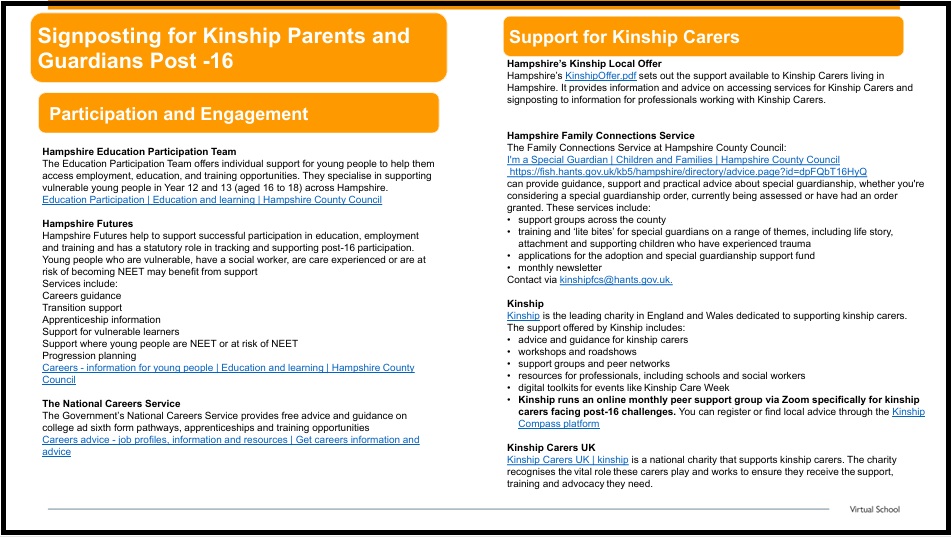
signpost families to advice, resources and support available locally and nationally
-
provide advice and guidance to kinship carers with special guardianship orders and child arrangements orders, regardless of whether their young person was previously looked after by the local authority.
-
support awareness of post-16 pathways, further education, apprenticeships, employment and higher education opportunities
-
promote partnership working between families, education providers and other services to help young people achieve positive outcomes into adulthood
-
-
-
Promoting the Education of Children with a Social Worker and Children in Kinship Care Arrangements: Virtual School Head Role Extension
-
Children and Families Act 2014
-
SEND Code of Practice: 0-25 Years
-
Keeping Children Safe in Education (relevant sections for colleges and further education providers)
-
16-19 Bursary Fund Guidance
-