Looked-After Children (LAC)
Section outline
-
This brief video outlines key information about looked-after children and how social workers can best support their education.
Supporting the Education of Children in Care (CiC)
Children in care face unique challenges that can impact their educational progress. As part of the role of the Virtual School Head, there is a focus on improving outcomes for all children in care, recognising education as a key protective factor in their lives.
Key Aims
- Ensure the educational needs of children in care are recognised and prioritised
- Support consistent attendance and reduce exclusions, recognising that being in education helps keep children safe
- Raise aspirations and close the attainment gap for children in care
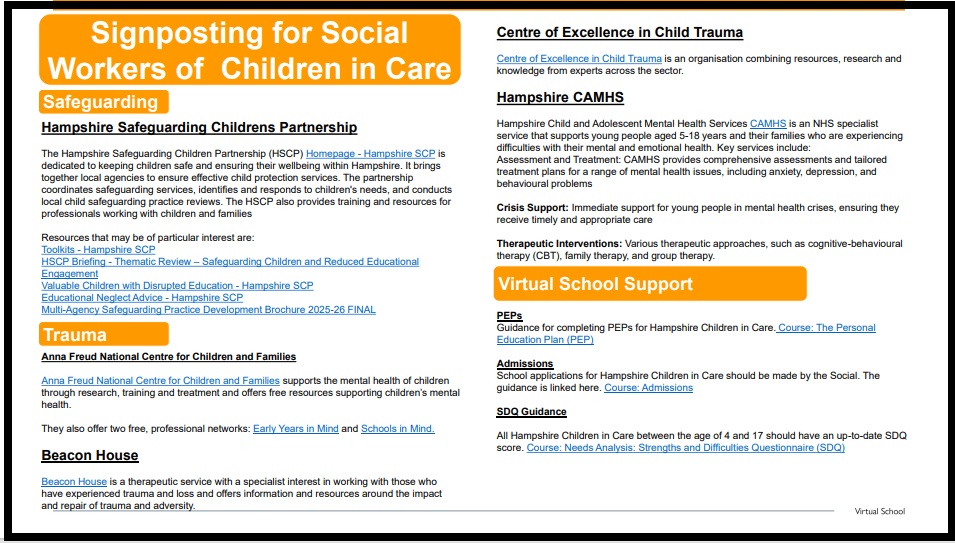
Click here to access important resources, including:
- Virtual School Guide to PEPs, Statutory Duties and More
- The Personal Education Plan (PEP)
- The PEP Toolkit
- Strengths and Difficulties Questionnaire (SDQs)
- Reach to Teach App
- Pupil Premium Plus
- Attendance, Suspensions and Exclusions
- Admissions
- Permanent Exclusions for Children in Care - Guidance for Social Workers
-
- Collaborate effectively with education professionals (e.g. Designated Teacher, SENCo, DSL, key workers) to ensure joined-up support
- Champion attendance as a safeguarding priority - monitor and address barriers to regular school attendance
- Prioritise relationships - build trust with the child and their carers, and ensure their voices are central to planning and decision-making
- Share information proactively to support education planning, including personal education plans (PEPs)
- Advocate for high aspirations - ensure education is part of every conversation about the child’s future
-
- Know and track the CLA cohort
- Ensure collaboration between key staff (Designated Teacher, DSL, SENDCO, attendance/progress leads, safeguarding governor)
- Ensure Personal Education Plan (PEP) is completed
- Understand individual needs and barriers to learning, using available needs analysis tools
- Prioritise CLA in planning, interventions, and support
- Build strong relationships with the pupil, ensuring pupil voice is at the centre of any decisions made
- Ensure pupil voice is a common thread throughout the PEP
- Complete the Strengths and Difficulties Questionnaire (SDQ) when required
- Work in partnership with carers, social workers, and the Virtual School
-
- Partnership working with education settings, early years settings, and social care
- Training and development for professionals working with CiC
- Targeted, data-informed projects and interventions
- Advice, guidance, and access to free tools and resources